Wednesday, February 10, 2010


Tuesday, February 9, 2010
Reading Response 4: Influences of Non-places in the concept of Latin America
Eduardo Navas’ curatorial essay for Transitio_MX New Media Beinnale, discusses the idea of ‘non-place’ in relation to Marc Augé’s book that examines the anthropology of supermodernity. He concurrently introduces several artists whose works investigate "the relevance of geopolitical differences that shape the use of appropriation and technology in artistic practices" and were presented in the exhibition held in Mexico City in 2009. In regard to the exhibition Navas states:
“I consider the works of art I selected for the biennale’s theme of “Autonomies of Disagreement” to be representative of how art production is affected by the growing dependency on the concept of non- place, as a means to take apart the complex motivations that displace and ask for reconsideration of concepts of nationality and identity; this shift leads to the development of cultures around the world that become more similar than ever before. In this sense the preoccupation with geopolitical differences becomes eroded; therefore, hegemony is still an issue that is relevant in the critical analysis of globalization.”
I too am interested in the section where the essay addresses tourism. Thinking about the notion of Las Vegas being a ‘one stop shop’ for experiencing several popular cities throughout the world I could not help but think of how many, especially in era of “staycationing,” are now virtually traveling to locations throughout the world. With the influx of webcams and online sites such as google earth/streetview, creating autonomous spaces and even virtually visiting other locations is becoming more than accessible to those with internet access. Though Las Vegas is the initial “template of cultural representation” as stated by Navas, engines like google earth are now becoming the new virtual template for these representations.
For individuals who come from small towns and remote locations where access to an airport or even greyhoud bus is not always immediate or possible at all, these tools are becoming imperative to experiencing different places. In accordance with Auge’s concept, because of these tools, cities all over the world are becoming “spaces that need not be visited.”
“I consider the works of art I selected for the biennale’s theme of “Autonomies of Disagreement” to be representative of how art production is affected by the growing dependency on the concept of non- place, as a means to take apart the complex motivations that displace and ask for reconsideration of concepts of nationality and identity; this shift leads to the development of cultures around the world that become more similar than ever before. In this sense the preoccupation with geopolitical differences becomes eroded; therefore, hegemony is still an issue that is relevant in the critical analysis of globalization.”
I too am interested in the section where the essay addresses tourism. Thinking about the notion of Las Vegas being a ‘one stop shop’ for experiencing several popular cities throughout the world I could not help but think of how many, especially in era of “staycationing,” are now virtually traveling to locations throughout the world. With the influx of webcams and online sites such as google earth/streetview, creating autonomous spaces and even virtually visiting other locations is becoming more than accessible to those with internet access. Though Las Vegas is the initial “template of cultural representation” as stated by Navas, engines like google earth are now becoming the new virtual template for these representations.
For individuals who come from small towns and remote locations where access to an airport or even greyhoud bus is not always immediate or possible at all, these tools are becoming imperative to experiencing different places. In accordance with Auge’s concept, because of these tools, cities all over the world are becoming “spaces that need not be visited.”
non-places
everyone can twit... so everyone can disagree anonymously... and everyone can create noise...
Basically he writes this essay and then asks... is this okay?
Playing ones part in the whole set of noise... noone to pay attention because everyone in paying attention to themselves. As artists we should abstian from opining! The noise is enough...
Basically he writes this essay and then asks... is this okay?
Playing ones part in the whole set of noise... noone to pay attention because everyone in paying attention to themselves. As artists we should abstian from opining! The noise is enough...
Reading Response | Navas | JD Pirtle
“The Influence of Non-places in the Concept of Latin America” by Eduardo Navas discusses issues of non-place, the border-less space of the internet and the plight of artists working in the wake of the information age. I found all of the works mentioned from the Transitio_MX Bienalle to be interesting, but wondered about their relevance to Navas’ curatorial interests and specific theme. At several points in the reading it seems that Navas thinly connected these projects to any notion of Latin America, if at all.
What interested me most about Navas’ paper was the issues of the great shift in the milieu of art; it becomes difficult to look at pieces as were mentioned in the text and decipher the country of origin for either the art or the artist. Projects like Translator II: Grower have a certain ambiguity and universality that would enable it to be immediately accepted by various cultures, regardless of their level of technocracy (provided that they had seen grass before). This universality present in Raaf’s piece and a great deal of art/tech work leads to a chicken-and-egg question: do contemporary artists make this type of work to appeal to an increasingly globalized community? If so, is it a conscious effort? Do they perceive a mutuality of connection via the non-place of the internet and therefore create work that is designed to reach anyone conceptually? If not, why are so many works increasingly global in scale and universal in content? Perhaps what people (including the artists themselves) have come to expect of technology art is what they expect from the technology they encounter everyday. In a world made up of cultures that are increasingly nationalistic and simultaneously becoming mutually fluent in a homogenous mode of interaction (user interfaces), are the best art pieces those that deliver universal art experiences through the modes of instant, sleek and technological?
This concept of universality is related to Navas’ mention that “Las Vegas is architectural simulacra”--a more accurate conception of Las Vegas would be as caricature. A simulation is such that it is difficult to discern it from the real thing. Las Vegas is caricature in that it highlights or exacerbates desired aspects of these places and diminishes or hides others. Likewise, if in all of the social networking sites that Navas references, a great deal of simulation or caricature is present in the way people present or represent themselves. Things are punctuated or de-accentuated. What people have come to expect of technology is either simulation or caricature. What technology used in art production implicates is producing work of a scale that is significantly global, universal or physical. Perhaps art/tech practitioners can harness these qualities to embody non-place and place simultaneously, resolving some of the issues Navas discusses.
What interested me most about Navas’ paper was the issues of the great shift in the milieu of art; it becomes difficult to look at pieces as were mentioned in the text and decipher the country of origin for either the art or the artist. Projects like Translator II: Grower have a certain ambiguity and universality that would enable it to be immediately accepted by various cultures, regardless of their level of technocracy (provided that they had seen grass before). This universality present in Raaf’s piece and a great deal of art/tech work leads to a chicken-and-egg question: do contemporary artists make this type of work to appeal to an increasingly globalized community? If so, is it a conscious effort? Do they perceive a mutuality of connection via the non-place of the internet and therefore create work that is designed to reach anyone conceptually? If not, why are so many works increasingly global in scale and universal in content? Perhaps what people (including the artists themselves) have come to expect of technology art is what they expect from the technology they encounter everyday. In a world made up of cultures that are increasingly nationalistic and simultaneously becoming mutually fluent in a homogenous mode of interaction (user interfaces), are the best art pieces those that deliver universal art experiences through the modes of instant, sleek and technological?
This concept of universality is related to Navas’ mention that “Las Vegas is architectural simulacra”--a more accurate conception of Las Vegas would be as caricature. A simulation is such that it is difficult to discern it from the real thing. Las Vegas is caricature in that it highlights or exacerbates desired aspects of these places and diminishes or hides others. Likewise, if in all of the social networking sites that Navas references, a great deal of simulation or caricature is present in the way people present or represent themselves. Things are punctuated or de-accentuated. What people have come to expect of technology is either simulation or caricature. What technology used in art production implicates is producing work of a scale that is significantly global, universal or physical. Perhaps art/tech practitioners can harness these qualities to embody non-place and place simultaneously, resolving some of the issues Navas discusses.
Week 4: Reading Response - Non-Places in the Concept of Latin America
The Eduardo Navas essay "The Influence of Non-places in the Concept of Latin America" extends the idea of non-places beyond areas of transition and explores its impact on various areas of a globalizing culture. Non-places permeate today's society in many ways. When we enter any designed commercial space we enter a what I believe is a non-space. Navas cites the mall, but we can see this phenomenon in many of the places where people congregate (congregation is a great economic opportunity!). In more rural areas we can see that Wal-Mart becomes "the mall" and, in general terms, wal-mart is offers a homogeneous space regardless of location (think Mexico Wal-Marts).
I can see this type of homogenization having its basis in the evolution of economic multinational corporations. There is a strong economic motivation for the evolution of non-spaces. Tourism is a prime example but so is the arena of User Experience (UX) Design. One of the goals is to offer the user a level of familiarity in their virtual experience so that they can spend more time in that community. Navas alludes to this in the “common” interfaces provided by social networks.
I believe that these social networks are a prime example of today’s virtual white-collar Maquiladoras. If you take into consideration the cultural capital(images, video, content, etc) which people put up, it is essentially cheap labor for the sake of creating online traffic to a specific community which is in turn used as economic capital by the corporation. While I am not sure of the implications it is interesting to frame this in the context of a globalized experience.
For me the greatest area of interest are the questions raised by Navas in terms of identity. How does they feedback loop of non-spaces and globalization affect those whose labor keeps them going?
Transitio_MX
 In his curatorial essay for New Media Bienalle, Transitio_MX, entitled “The Influence of Non-places in the Concept of Latin America”, Eduardo Navas discusses specific works of Paul Ramírez Jonas, Vicky Funari and Sergio De La Torre, Sabrina Raaf, Owen Mundy and Joelle Dietrick, and Carlos Rosas. Navas elucidates how the works relate to "the relevance of geopolitical differences that shape the use of appropriation and technology in artistic practices". The Transitio_MX symposium took place in Mexico City October 1-11, 2009.
He begins with the notion of homogeneity in global culture defining it as follows: "a global aesthetic of entertainment has been developed to provide the tourist traveler with a generic and safe experience of a place rather than an immersion in the actual local culture". Supermodernism, and glocality (vs locality) relate loosely to international style in architecture championed by Walter Gropius, among others.
 Locally, Gropius' Michael Reese Hospital campus had been proposed to be reused for Chicago's 2016 Olympics bid. That campus now awaits destruction. Relating back to new media for further examples of such an aesthetic, Navas writes,
"The computer, then, becomes the generic vehicle: the global, supermodern device that is able to function according to the minimal, self-encasing aesthetic of supermodernity, which currently informs social media."
He goes on to elaborate that the multiple layers of media and new media serve to reinforce notions of place, and that there is a new kind of place-making being developed. Place-making is a theme I have developed in Stamps for Kids Mobile: a Media Archaeology Intervention.
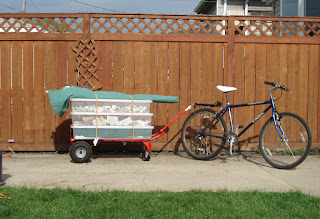
In this work I create a mobile device which creates place out of any old spaces (typically parks). He goes on to point out the the geopolitical nature of marginality, or non-spaces is endemic in terms such as "Latin America". This also promotes the idea that text is technology.
It is useful to point out that Enrique Dussel and other promote the idea of transmodernism as a term displaces simplistic notion of postmodernism. Quoting Navas from his own blog, remixtheory.net:
"Enrique Dussel, a well respected philosopher who writes on aesthetics and politics in globalization, was the first speaker. He gave a brief, yet in-depth history of modernism and how it should be reconsidered as part of other histories. While this may appear to be a recognizable proposition by post-colonial studies, what is specific to his lecture is that he proposed the term “transmodernism” as a constructive alternative to postmodernism. For Dussel the latter implies a non-western approach to global cultural activity. With transmodernism Dussel proposed that people around the world should take from and work with modernism, but with autonomy; that is by taking from modernism what they decide to work with according to their own histories and cultures, rather than allowing western thought to be imposed."E. Navas. October 3rd, 2009, http://remixtheory.net/?p=394.

This notion impacts my work in mailart and artistamps. I find the playfulness of mail art and artistamps to be a subversive analog to new media. Wholly interactive, global and hyperlocal as well as hyper-real, artisamps as virtual worlds expose the gap between virtual and material reality vis-a vis global networked culture.
Joe Pankowski Reading Response 5
I like the piece of the essay where Navas talks about tourism and how it is driven by peoples need to let other people know where they have visited. They do this by finding that monument that encapsulates a culture, region, or experience in their mind and the collective mind of our society, and then document themselves standing in front of it as proof that they are expert travelers. These monuments or famous scenes come to mind when you think or hear certain locations, for example when I think or hear Paris right away the Eiffel tower comes to mind. Any well known location has this universal image that may or may not be totally factual but they have it and it helps people identify with that place. Where I'm from, Omaha, Nebraska there is this deep desire by the people who are from there and live there for Omaha to be one of these recognized universally known non-places. They desperately want people to recognize the Omaha skyline just as well as the Chicago skyline, for example when ever there is a new building being built in Omaha's downtown it's the first story covered on the local news. Another example is the last mayor in Omaha had a pedestrian suspension bridge built across the Missouri River basically to add something new to the Omaha post card picture. Also when ever a movie is filmed in Omaha, Omahans will go see the movie just to see their city being used as a hopeful universally known city. I think this is an example of a locality wanting to become global. Communities like Omaha, see how places and experiences are universally reproduced and watered down and they see that as success.
Here is a link to Omaha's website citing the movies filmed in Omaha.
Eduardo Navas Curatorial Essay for Transitio_MX, New Media Biennale, Mexico City
I've found Navas's text interesting but in some points not so clear. The first section of the essay is called: “The Influence of Non-places in the Concept of Latin America” by reading this first section is hard for me to understand how Latin America is/was influenced by Non-Places. Of course it is, but I can't grasp how Navas think it is since this first section is used mostly to talk about the works, not about Non-Places/Latin America relation.


The concept of glocality as presented in the text refers to "think global, act local" I was thinking what does it means to act locally. This arises the problem of the Museum or Galley space, both of them are also Non-Places, even more, it can be argued that art is a producer of non-places as much as any mayor multinational. Any white space which could be placed in any other part of the world with an almost identical internal structure, providing an almost identical experience, is not a non-place? Are itinerant art shows working in this platform?
Maybe acting locally from an art curatorial point of view could be to select works that are site specific, works that even if talking about global problems could only make sense within local conditions. Another project presented at Transitio_MX 2009 was Ashok Sukumaran's "Recurrencies” curated by Gunalan Nadarajan. In this public artwork Sukumaran got permission to take on a public light display usually used to promote a national symbol, and reconfigured the already existing lights to create a corn cob, which is a national food in Mexico. The sign includes an arrow that points to a mobile cart that sells corn for 12 pesos on the same spot daily.
Maybe acting locally from an art curatorial point of view could be to select works that are site specific, works that even if talking about global problems could only make sense within local conditions. Another project presented at Transitio_MX 2009 was Ashok Sukumaran's "Recurrencies” curated by Gunalan Nadarajan. In this public artwork Sukumaran got permission to take on a public light display usually used to promote a national symbol, and reconfigured the already existing lights to create a corn cob, which is a national food in Mexico. The sign includes an arrow that points to a mobile cart that sells corn for 12 pesos on the same spot daily.


Saturday, February 6, 2010
week 4 baldwin
In talking about “The influence of Non-places in the Concept of Latin America” Navas starts out connecting the ideas of ‘think global, act local’ related to geographic and political differences as they relate to appropriation and technology. Navas touches onto the ideas of Augé’ on non-space. I particularly enjoy the idea of Las Vegas being the simulacra of the world -- I’d like to relate this to the book I’m reading currently Bicycle Diaries by David Byrne:
These new buildings may not be beautiful. They may not even be utoptian, as some architectural scholars and theories of modernism might have hoped, but they are cheap, functional, and they don’t remind people of anything that went before... The new generations will shrug off the weight of countless millennia and symbolically declare themselves free. (pg 79, Bicycle Diaries, Byrne)
Next Navas emails the historical idea of non-places to himself elevating the internet as a place that can also contain non-places to introduce and inform the reader on his curatorial practice and further expand upon the idea of non-place.
Navas then goes into the geopolitical differences, and glocality, and discusses the intent behind his curatorial practice -- “Transitio_MX, Maquilápolis is included to expose the production that goes behind the realization of non-places, and to reflect on how the industry of the maquiladoras supports the global economy.” Maquilapolis opens with a display of borders between Mexico and the U.S. and folding back in non place I think back to Byrne’s ideas that these kind of spaces, both the city structure and these workplaces can take on a the identity of “spaces that need not be visited, but named” as Augé describes non-place.
I feel that corporations have taken on a sense of non-place and this is to their benefit. It takes a spectacle of the yes men, or other mature hacks, to change these spaces into something new that the lens of society can then look at as something new and old as well, but able to scrutinize.
The text is strong in that it clearly lays out it’s idea of non-place juxtaposed to a curatorial practice but I feel that the segments could be tightened up some. I think the ubiquity of non places can lead to difficult space to navigate in and Navas curates works nicely out of it.
These new buildings may not be beautiful. They may not even be utoptian, as some architectural scholars and theories of modernism might have hoped, but they are cheap, functional, and they don’t remind people of anything that went before... The new generations will shrug off the weight of countless millennia and symbolically declare themselves free. (pg 79, Bicycle Diaries, Byrne)
Next Navas emails the historical idea of non-places to himself elevating the internet as a place that can also contain non-places to introduce and inform the reader on his curatorial practice and further expand upon the idea of non-place.
Navas then goes into the geopolitical differences, and glocality, and discusses the intent behind his curatorial practice -- “Transitio_MX, Maquilápolis is included to expose the production that goes behind the realization of non-places, and to reflect on how the industry of the maquiladoras supports the global economy.” Maquilapolis opens with a display of borders between Mexico and the U.S. and folding back in non place I think back to Byrne’s ideas that these kind of spaces, both the city structure and these workplaces can take on a the identity of “spaces that need not be visited, but named” as Augé describes non-place.
I feel that corporations have taken on a sense of non-place and this is to their benefit. It takes a spectacle of the yes men, or other mature hacks, to change these spaces into something new that the lens of society can then look at as something new and old as well, but able to scrutinize.
The text is strong in that it clearly lays out it’s idea of non-place juxtaposed to a curatorial practice but I feel that the segments could be tightened up some. I think the ubiquity of non places can lead to difficult space to navigate in and Navas curates works nicely out of it.
Wednesday, February 3, 2010
Presentation Linkage
Here is the link to my presentation of Suspicious Images, Latent Interfaces (aka Situated Advocacy reading).
Andyland: Network as Metaphor
Recent updates to my thesis (Andyland: Network as Metaphor) blog include the requisite info.
Situated Advocacy
Data Clouds / InfoVis = Bad / Lack Criticism
"Producing a nice diagram is not all that is required in making sense of something." but reducing a nice diagram of EPA data could hopefully produce a government job. No one ever said or asked these InfoVis "students" to be critical... they are just doing homework. Who are the artists making such charts and what data are they producing / visualizing?
Arduino now has http://www.pachube.com/: "Store, share & discover realtime sensor, energy and environment data from objects, devices & buildings around the world. Pachube is a convenient, secure & scalable platform that helps you connect to & build the 'internet of things'."
Producing a contained object collecting data in a gallery setting does not create a dialog... it may create an eloquent interesting work of art but not something socially relevant. (See Penticost) Why is one 50% bigger than the other? Come on! this is your great revelation...
Self-promotional fluff... I hate that picture of Dr. Jeremijenko in the lab coat or maybe I just hate her because she took my first name as part of her last.
I didn't read the second interview... but it does have some punchy Data Cloud / infoVis in it.
"Producing a nice diagram is not all that is required in making sense of something." but reducing a nice diagram of EPA data could hopefully produce a government job. No one ever said or asked these InfoVis "students" to be critical... they are just doing homework. Who are the artists making such charts and what data are they producing / visualizing?
Arduino now has http://www.pachube.com/: "Store, share & discover realtime sensor, energy and environment data from objects, devices & buildings around the world. Pachube is a convenient, secure & scalable platform that helps you connect to & build the 'internet of things'."
Producing a contained object collecting data in a gallery setting does not create a dialog... it may create an eloquent interesting work of art but not something socially relevant. (See Penticost) Why is one 50% bigger than the other? Come on! this is your great revelation...
Self-promotional fluff... I hate that picture of Dr. Jeremijenko in the lab coat or maybe I just hate her because she took my first name as part of her last.
I didn't read the second interview... but it does have some punchy Data Cloud / infoVis in it.
Tuesday, February 2, 2010
Autonomy, Participation, And - Clair Penticost
"Keep talking happy talk.. talking about the things we're spose to do... bubble gum, ice cream, pop corn and coke it must be true the at the world is a joke."- Daniel Johnston
Has the paradigm of the aesthetic encounter been redefined?
I ask should it... or is it? "Little boxes on the hill side, little boxes all the same." - Weeds Intro this paradigm shifted years ago. Illustration: Brian O'Doherty "Inside the White Cube - The Ideology of the Gallery Space" (1976 Art Forum)
If artists are as ignorant as most people, the structures of participation they offer audiences reproduce existing feelings of paralysis and powerlessness and ultimately contribute to prevailing cynicism about any kind of participation at all. "If ignorance is bliss then whip this smile off my face." - Rage Against the Machine
Solutions have to come from major media not artists or artist need to get the support of major media. Illustration: http://landshare.channel4.com/ Hugh, is a grower of meat and veg and an enthusiast for sustainable practices... even if this mean eating the occasional squirrel.
When artists take action in a public sphere with good intentions their actions tend to have a ironic sensibilities... irony is often lost to large portion of the public.
Illustration: Michael Moore, who isn't an "artist" but uses ironic humor to make a point.
Has the paradigm of the aesthetic encounter been redefined?
I ask should it... or is it? "Little boxes on the hill side, little boxes all the same." - Weeds Intro this paradigm shifted years ago. Illustration: Brian O'Doherty "Inside the White Cube - The Ideology of the Gallery Space" (1976 Art Forum)
If artists are as ignorant as most people, the structures of participation they offer audiences reproduce existing feelings of paralysis and powerlessness and ultimately contribute to prevailing cynicism about any kind of participation at all. "If ignorance is bliss then whip this smile off my face." - Rage Against the Machine
Solutions have to come from major media not artists or artist need to get the support of major media. Illustration: http://landshare.channel4.com/ Hugh, is a grower of meat and veg and an enthusiast for sustainable practices... even if this mean eating the occasional squirrel.
When artists take action in a public sphere with good intentions their actions tend to have a ironic sensibilities... irony is often lost to large portion of the public.
Illustration: Michael Moore, who isn't an "artist" but uses ironic humor to make a point.
baldwin thesis link
https://dl-web.dropbox.com/get/thesis%20stuff/509-Baldwin-Thesis-2010.pdf?w=cabde2eb
Hope it works -- timeline is up in the air right now, will add adjusted one asap
Hope it works -- timeline is up in the air right now, will add adjusted one asap
Week 3 - Response 2 - Slow & Feral
Feral robots - I find an instant personal connection to ideas of public and sharing -- this leads to the describing of proboscis, in what sounds great - with the likes of public, sharing, knowledge, memories and then it stumbles into “our” with it’s description of various devices. This at first seems almost like a proprietary claim but with further reading it feels more like the articles embracing the community that has developed a set of great tools. What I find frustrating about this text and others like it is the alienization of the public from the public, that is to say that there is anything else than public authoring. What is ever truly public and what isn’t private? The only activities that unite us under the flag of public are really the human physical and biological musts of life and everything else un-arguably falls into a private, no matter how big, realm. But let’s say that robotics does become truly public, from the CEO of financial firms to the fry cook at McDonalds -- what then? Does democratization cause no harms? Overall the publishers design and intent of the article certainly provokes comment and debate, but I don’t know if it’s any more or less useful than the public sharing of robotics and authoring.
Slow Design - What I see missing from a lot of this weeks text is a connection to the very people that activist and tactical art proposes to save from huge corporations and evil sub-governments - that is to say that it speaks to very finite audiences of technological, aesthetic, urban studies, and typically an affluent educated class and by affluent I would refer to people without the time, capacity or desire to engage in even a beginning conversation to start to understand what it means to care about “reveal” and “expand” when their hopes and desires are already crushed on a regular basis. On both of these texts I feel that they both read as clubs I have to join, another thing I would have to maintain or a password for my firefox to have to remember --
Slow Design - What I see missing from a lot of this weeks text is a connection to the very people that activist and tactical art proposes to save from huge corporations and evil sub-governments - that is to say that it speaks to very finite audiences of technological, aesthetic, urban studies, and typically an affluent educated class and by affluent I would refer to people without the time, capacity or desire to engage in even a beginning conversation to start to understand what it means to care about “reveal” and “expand” when their hopes and desires are already crushed on a regular basis. On both of these texts I feel that they both read as clubs I have to join, another thing I would have to maintain or a password for my firefox to have to remember --
Week 3 - Response 1 - How Situated Advocacy Works
How Stuff is Made - is an hopeful exciting resource of “manufacturing processes and labor conditions involved in the production of contemporary products.” This is first exciting because it exposes both consumers and corporations to a community which will not police but observe and be informed. This will create a community of both more responsible corporations (or better at hiding injustices) and a more aware public (or more dependent upon this community to do the job for them). The site is easy enough to navigate but indistinguishable as to if it is a proposal for said site or the site itself. It does have a strength in connecting to works like yes men and similar works, but the danger is in protecting the information collectors. I think it resembles a cross of the better business bureau and wikipedia - which is a nice place to begin.
http://www.bbb.org/
Personally I would like to see this site on it’s own feet apart from a university server.
Situated Advocacy - I get an immediate vibe of what can be measured can be managed, and to tie it into the How Stuff is Made site. While it predicts a conversation it projects juxtaposition. I enjoy the images, some that read like serious examinations (the two genetically identical trees) and other that read like playful studies of the environment they arrive from (Dr. Jerimijenko examining purposefully the relevant data).
http://www.bbb.org/
Personally I would like to see this site on it’s own feet apart from a university server.
Situated Advocacy - I get an immediate vibe of what can be measured can be managed, and to tie it into the How Stuff is Made site. While it predicts a conversation it projects juxtaposition. I enjoy the images, some that read like serious examinations (the two genetically identical trees) and other that read like playful studies of the environment they arrive from (Dr. Jerimijenko examining purposefully the relevant data).
Week 3: Reading Response 1 – Situated Advocacy
There is a great deal to take in from this reading but here are some of my initial impressions which are subject to change as all of it settles. There were some interesting issues raised throughout the discussion in terms of agency, advocacy, roles and creation.
BB and NJ bring up some good points in terms of understanding the context of any data. We need data on the data. Context is data. Then we need data on the data’s data. Repeat ad naseum. We are in the era of data pollution where anything can be argued through “objective” data and however it is framed can be made irrelevant. As such, it has become important to understand how data has been made oppressive and how one can subvert data against the data oligarchy.
With the shift to ubiquitous and pervasive computing an avenue has opened up which many people can use to generate data. In fact I believe that BB & NJ propose that we collect our own data, with our own agendas. I believe it to be true that people will rarely act unless it is in their self-interests and what better interest than our own health. We forget how closely our health may be tied to the environment and therefore we should care about the environment.
Through the Environmental Health Clinic we see how one can appropriate an established role of reverence (in an almost yesmen vein) to serve as a vehicle for action. Perhaps it is through these types of actions that the general public may be mobilized to take action on making the changes that directly affect them.
Week 3: Reading Response 2 – Slow Design Principles
Slow Design principles presents a philosophy for design that, to me, simply formalizes a number of design principles currently in practice under a specific umbrella term. Apart from this it sets out a lofty goal to be an agent of change by changing the designer’s behavior and subsequently changing the mindset of those who consume the creations of said designers.
The principles are hardly novel but the thread connecting all of them is interesting. “Stop to smell the roses” is something we have all heard yet it is something we can rarely afford to do. Doing so is what I advocated through these principles.
The examples provided are great and many of them do a fine job in embodying each principle under which it is presented but the problem I see is that they tend to only embody one principle but may not embody another or may make assumptions as to how it will be received by the public at large. What is the value in this evaluation methodology if other principles are broken? Does it matter?
The most potential, I believe, lies with the ENGAGE principle and the Rural Studio project which teaches these principles towards sustainability with a focus on locality. This not only engages the community but also engages the designers to change a local philosophy (which is the longer-term goal) while also providing a more tangible positive feedback to the designer who is also part of the community itself. I believe it is through this symbiotic immersion that they Slow Principles can serve as a vehicle for both change in society and a shift in design philosophies within the design community. In this sense I believe that it is no accident that two of the principles involve collaboration. It is through this collaboration that anyone can invite different perspectives so that one can be better equipped to address any shortcomings in any given effort and it also serves as a vehicle for spreading and obtaining buy-in to one’s philosophies.
The case study presented is an exercise which I believe falls short on being particularly interesting but it does frame the principles in a manner which was described in the abstract -- “..to interrogate, evaluate and reflect on their design ideas…” I believe that this publication does a fine job in collecting a number of principles and offers great examples but I do not think that there will be a mass conversion of “slow designers”.
Subscribe to:
Posts (Atom)